Custom Plastic Injection Molding: Design Decisions That Reduce Manufacturing Costs
Most of the savings in custom plastic injection molding are decided before the first part is molded. Geometry, tolerances, material, and mold strategy all shape tooling investment and cycle time, so a few smart choices can lower the cost of every part. We see the biggest savings when design and manufacturing are considered together.
Here are the decisions that matter most, and you can explore our full custom injection molding services anytime.
- Eliminate Undercuts Where Possible
An undercut, such as a snap-fit tab or side hole, prevents a part from releasing from the mold and may require side actions, lifters, or slides. Many undercuts can be removed by reorienting the parting line, using pass-through openings, or simplifying attachment geometry. Save side actions for features that truly need them.
- Keep Walls Uniform and Minimal
Cooling often takes up most of the molding cycle, and in simplified models cooling time rises roughly with the square of wall thickness. Thinner walls generally mean shorter cycles, and many parts use walls of about 1.5 to 4 mm, depending on material and application. Uniform walls also limit warpage and sink marks, while ribs and gussets add stiffness without thickening the main wall.
- Apply Draft Angles Consistently
Vertical faces generally need about 1° to 2° of draft so parts release cleanly. Too little draft leads to sticking, scuffing, and scrap.
- Specify Tolerances Only as Tight as Function Requires
Tight tolerances require more precise mold machining, tighter process control, and more inspection. Hold them on critical mating features, avoid them in areas prone to warping, and let non-critical dimensions follow standard commercial tolerances.
- Choose the Right Material, Not Just the Cheapest
Resin price per pound is only part of the picture. We mold PA, PE, PP, PC, ABS, TPR, PVC, and specialty plastics. One of our base attachment brackets used impact-modified, glass-filled nylon so it could pass a BIFMA test. A cheaper resin that fails validation costs far more than the right one specified up front.
- Use Existing Tooling and Smart Mold Strategy
Mold strategy is one of the biggest cost levers:
- Standard dies: We maintain hundreds. When one suits your part, it can shorten lead times and reduce tooling cost.
- Right-sized molds: From simple split designs to multi-plate tools, matching the mold to the part avoids paying for unneeded complexity.
- Cavitation: Multi-cavity molds lower piece price at volume but raise upfront cost, so annual quantities should guide the choice.
- Insert molding and self-mating parts: Embedding a component during molding can eliminate an assembly step, and identical halves can sometimes share one mold.
- Reduce Part Count and Size
Every extra component adds tooling, assembly, and inventory cost. Consolidating several parts into one molded piece, where function allows, can reduce both tooling and labor, and a smaller part can use less material. If assembly is part of your project, our assembly capabilities can help you decide where consolidation makes sense.
- Validate the Design Before Cutting Steel
Design reviews and prototyping catch fill, fit, and geometry issues before tooling begins. Identifying and redesigning an overly thick cross section early is far cheaper than modifying hardened steel. Our in-house CAD/CAM design and tooling team studies these issues and designs the tooling accordingly, and for early concepts, our custom engineered solutions and rapid prototyping service lets you test ideas first.
- Consider Global Sourcing for Suitable Large Runs
For suitable high-volume programs, imported production can lower cost. Through our global sourcing program, parts are made to the same specifications as our American-made products, with our Asia team coordinating planning, quality checks, and logistics. Because shipping and lead times affect total cost, we review each program individually.
Where This Applies
Our work, from banquet chair handles to institutional bed connectors, serves markets such as office furniture and medical. If your program also needs metal components, our custom metal stamping service can support it.
Conclusion
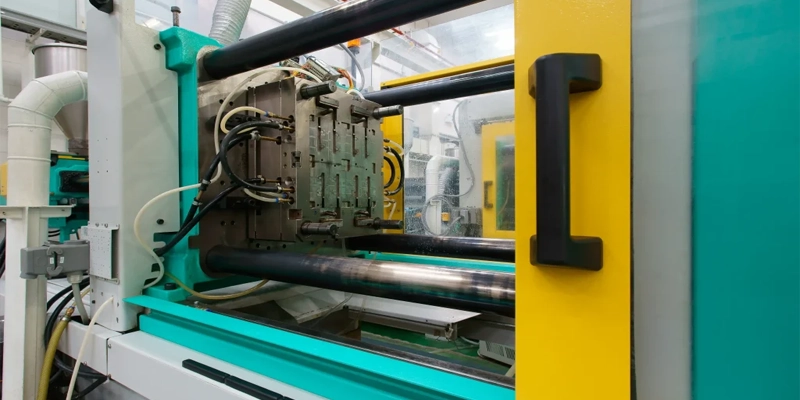
The most cost-effective part is designed with the process in mind. Minimizing undercuts, keeping walls uniform, applying draft, relaxing non-critical tolerances, and choosing the right tooling strategy all reduce tooling spend and per-part cost. With presses from 30 to 220 tons, in-house tooling, and a library of standard dies, Carpin can help you find the right solution. Contact us or call 203-574-2556.