
Caster Selection Guide
The functioning of a caster is far more complicated than many people realize. A caster is required to function under heavy loads, on uneven surfaces, as well as in dusty and dirty environments. The caster also has moving parts that must move freely and smoothly under adverse conditions, performing well for the life of the chair. Just like a strong highway bridge that has the proper form and design to withstand the heavy load of road traffic, a well built caster requires the proper construction to handle the rigors of a chair that is rolling and swiveling. Superior design and high quality materials contribute significantly to the performance and longevity of a caster.
Housing: The housing, or body, of the caster is the primary support structure for carrying the load of the chair. The housing connects the chair base to the wheels and essentially carries the entire load of the caster, cantilevered from the vertical axis of the stem to the horizontal tangency where the wheels meet the floor surface.
The construction of the housing must be substantial enough to provide adequate strength, but not have excessive thickness so as to be difficult to injection mold or use an unnecessary amount of material. Also, the design of the housing must provide the proper offset: the horizontal distance between the centerline of the stem and the centerline of the axle. If this offset is too small, the caster will not swivel well and will provide a sluggish feel when moving the chair. If the offset is too large, then the cantilevered distance will be too great, causing the caster to be structurally weak and prone to breakage or deflection.
Selecting the proper plastic material is essential to making the housing strong and durable. The material must be strong enough so that the housing can carry the heavy and dynamic loads required. The material must also be flexible enough to withstand abuse and accidental contact without cracking, while also maintaining the economical cost expected by the market. Rigorous testing is required to ensure that the material used and design of the housing are up to the task. Carpin constantly tests its casters to make sure they possess the strength, durability, and toughness required by our customers.
Wheels: All of the dynamic forces and movements of the caster are transferred to the wheels, making them critical to achieving many years of reliable service.
Wheel construction that features proper support and thickness will serve to ensure that the caster wheels are able to endure constant rolling under load while also resisting fatigue and deformation. If a wheel is poorly designed, the material can fatigue, causing cracking and failure of the tread over time. For soft wheel casters, the chemical and physical bonding between the soft tread and hard core is vitally important to making sure that the tread remains properly adhered to the core. Delaminating of the tread can occur on poorly designed wheel-treads or in situations where the quality of the plastic is suspect and/or the injection molding process is less than optimal.
Another very important facet of caster manufacturing is wheel-to-axle retention. Use of the proper retaining ring promotes excellent retention, as will a properly designed axle. Improper axle design, wheel design, or inferior quality materials can result in wheels falling off the caster during use, rendering both the caster and chair unusable. Maintaining proper fit and friction between the wheel and axle also promotes smooth rolling and long-lasting performance. The surface finish of the axle and wheel hole are critical as well. In addition, it is also important to use the proper type of axle grease, which helps limit heat build-up and reduces wear.
Click on a heading to advance to the appropriate section:
Housing Type
Unhooded Casters • Hooded Casters • Hooded Casters with Collar
 Unhooded Caster/Center Housing
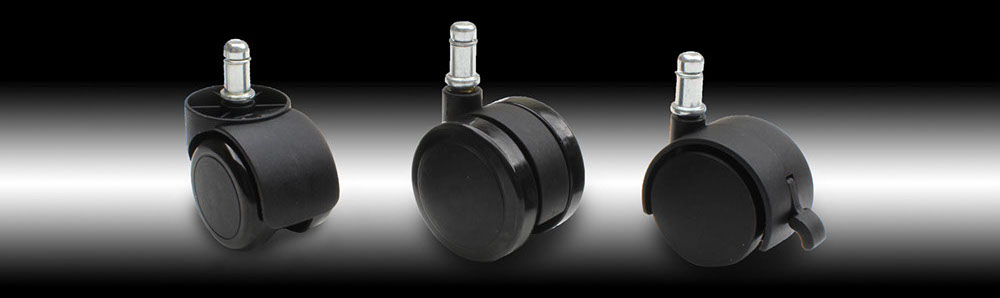
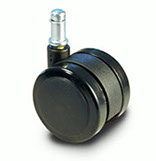
This design of caster body has no hood or cover over the wheels, so the caster wheels are entirely visible. Unhooded casters offer a more technical look, and they are also economical to manufacture because they utilize less material than hooded casters.
 Hooded Casters
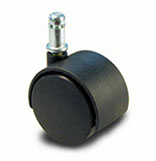
Hooded casters feature a cosmetic hood, covering or fender over the wheels, which conceals the tread of the wheels. Use of a hooded caster tends to give the furniture caster a more classic and polished appearance. In addition, the hood serves to hide dusty and dirty wheels for improved aesthetics.
 Hooded Casters with Collar/Eurostyle
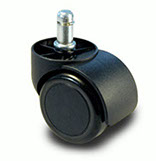
The hooded caster with collar (Eurostyle) is the most popular caster design for use in office chairs. Like the hooded caster, the Eurostyle caster features a hood that covers the caster wheels. However, unlike the hooded caster, the Eurostyle design also has a collar or barrel that surrounds the stem. The collar is typically the same diameter as the chair base, giving the chair base and caster a more unified appearance. Eurostyle collars are available in various collar diameters to match the width of the chair base, with the most common sizes being 38mm and 45mm diameter.
back to top
30mm‐45mm Caster Wheel Diameter
30mm-45mm Caster Wheel Diameter is typically used on mobile furniture such as credenzas or filing cabinets, the low profile of these small casters facilitates low mounting heights and makes the casters less visible. These wheels are not large enough for chair casters, which are subject to more activity and higher performance requirements.
50mm, 55mm & 60mm Caster Wheel Diameter
50mm, 55mm & 60mm Caster Wheel Diameter is the most common size range for chair casters. These casters have the ideal combination of performance, aesthetics and economy. 50mm wheels are more economical, have a lower and less obvious profile, and are most common on lower-end chairs. Most high-end chairs utilize 60mm casters because they are more durable, more substantial looking, and provide more ease-of-movement.
75mm-125mm Caster Wheel Diameter
These larger casters are ideal for heavy duty applications such as carts and tables and are generally more durably constructed. They can be made the same way as most chair casters, with wheels snapped onto the axle. These casters can also be produced with a more durable riveted‐axle style construction, enabling them to perform under greater loads and able to clear higher impediments. These larger casters are generally too large to use on office chairs and are also far less economical than 50mm or 60mm casters.
back to top
photo to come
Hard Wheel Casters
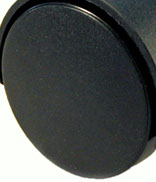
These wheels are constructed entirely of one material, usually nylon, which is the most common and economic configuration. While ideal for use on all durable surfaces, the most undesirable effect of the hard wheel caster is its tendency to be noisy on hard surfaces, especially uneven surfaces such as ceramic tile or concrete.
Soft Wheel Casters
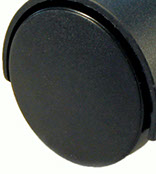
These wheels are constructed of a hard core surrounded by a softer material, typically a nylon core and thermoplastic polyurethane (PU) wheel tread. Soft wheel construction features a soft feel and quiet performance but is much more expensive than the hard wheel caster because this type of caster wheel uses more expensive materials and requires multiple steps to manufacture. Therefore, it is usually a high-end option for hard and uneven surfaces. Because the tread of the wheel is much softer and more forgiving than a hard wheel, use of a soft wheel caster will tend to reduce damage to less resilient flooring surfaces.
Conductive Wheel Caster/Antistatic Casters
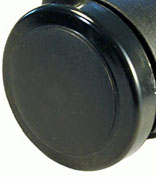
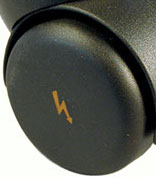
The conductive wheel caster is a form of specialty caster produced in both soft and hard wheel versions, with the wheel and caster body both able to conduct electricity. This design feature is considered ideal for use in clean rooms and anti-static applications.
back to top
Braking Options
Non-braking Casters • Lever Brake Caster • Unloaded Brake Caster
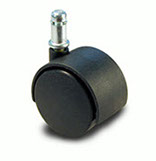 Non-braking Casters
Non braking casters are the most common caster and has no braking feature, which means the caster has no mechanism to lock the wheels in any way at any time. This is the most popular and most economical option for seating applications that do not require the wheels to be locked.
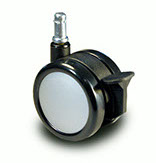 Lever Brake Caster
When braking is required, the most popular type of braking caster features a lever on the caster housing that generally has two positions: locked, which locks the caster wheels; and unlocked, which allows the furniture caster wheels to roll freely. Braking casters are generally employed on carts, tables or other mobile systems (other than chairs) where temporary or permanent immobilization of the furniture is desired.
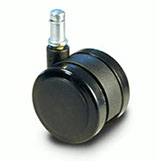 Unloaded Brake Caster
This is a specialty caster with spring‐loaded wheels that will not roll freely unless sufficient weight/compression is applied to the caster. Unloaded brake casters help prevent office chairs from rolling freely when the person stands up. While not
a popular feature in the U.S., many European countries mandate this feature on office furniture casters.
back to top
Caster Stems and Attachments
Friction Ring Stem • Threaded Stem/Bolt Stem • Top Plate
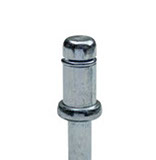 Friction Ring Stem
Friction Ring Stems are the most popular attachment for office chair casters and many other office furniture caster applications, consists of a smooth metal stem containing a spring ring that compresses when the caster is inserted into the receptacle. It is easy to insert and remove and usually provides sufficient holding power, ideal for plastic chair bases or tubular furniture with caster socket inserts.
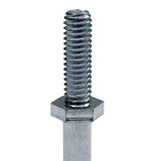 Threaded Stem/Bolt Stem
Threaded Stem/Bolt Stem is more common for tables, carts and frames-based metal furniture. The stem screws into a T-nut or other threaded insert, typically not recommended for office chairs, can provide for adjustment if necessary.
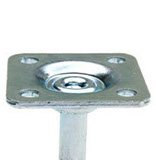 Top Plate
The Top Plate is a steel stamping which screws into the bottom of the furniture and attaches to the caster, common for the bottom of wood office furniture.